


You finally decide to replace that missing tooth. You search online, compare clinics, ask a friend, and suddenly the numbers are everywhere: $2,999, $4,500, $6,500, “starting from,” “consultation required.” No wonder people feel confused. Dental implant pricing can look simple at first, but the real cost depends on what is included, what is not included, and whether your case needs extra steps before the implant can be placed. In 2026, patients in Markham and across Ontario can generally expect a single dental implant to cost somewhere around $3,000 to $6,500 per tooth, depending on the clinic, materials, complexity, and whether the quote includes the implant post, abutment, and final crown.
Some Ontario sources place a standard full single-tooth implant closer to $4,000 to $6,000 when the implant post, connector, crown, and surgical placement are included.
What Is Included in Dental Implant Pricing?
A dental implant is not one single item. It is usually a multi-step treatment that includes:
The implant post, which is placed into the jawbone and acts like an artificial tooth root.
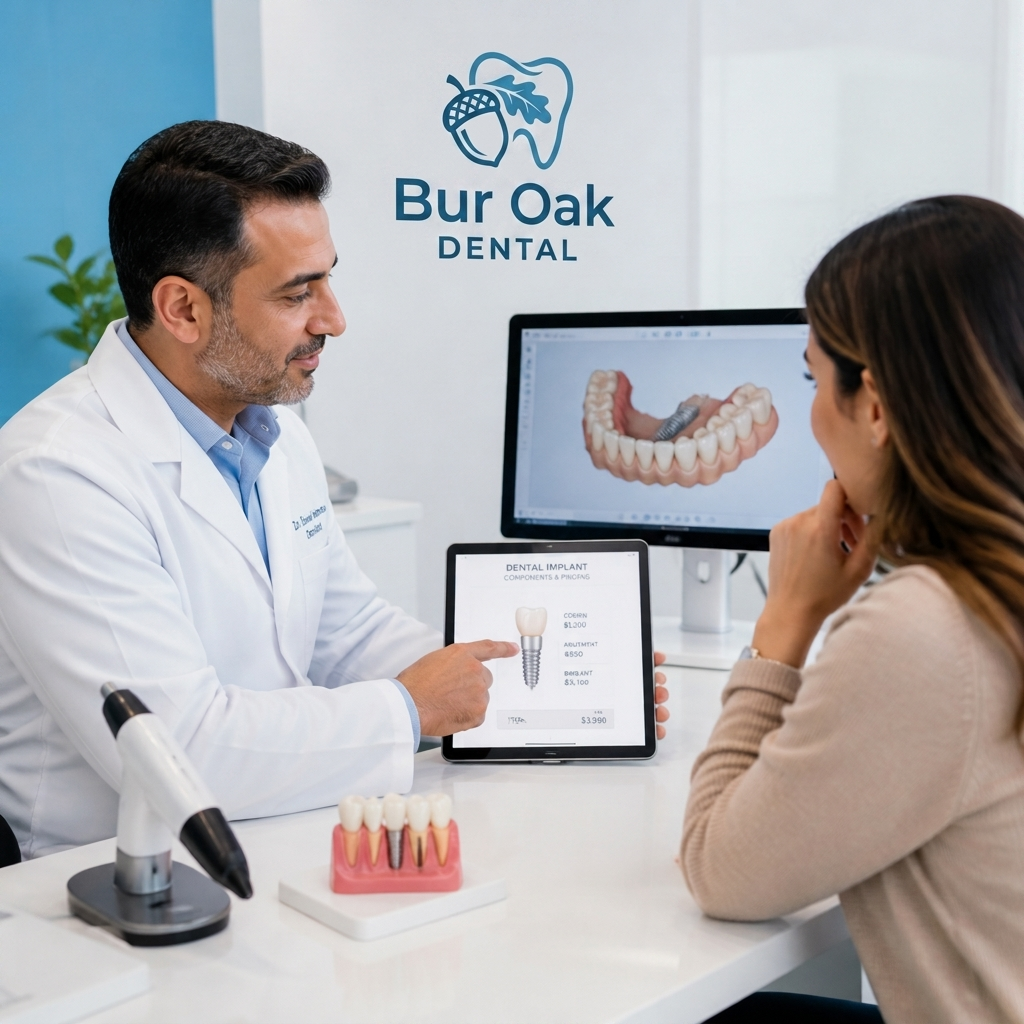
The abutment, which connects the implant to the replacement tooth. The crown, which is the visible tooth-shaped restoration.
The surgical placement, planning, follow-up visits, and sometimes digital scans or imaging.
When comparing prices from a Markham dental clinic, always ask whether the quote includes the full restoration or only the implant placement.
A lower advertised price may not include the crown, abutment, 3D scan, temporary tooth, bone grafting, or follow-up appointments.
People Also Ask: How Much Does One Dental Implant Cost in Markham?
For a straightforward single-tooth replacement, many Markham patients should budget approximately $3,500 to $6,500 in 2026. A simple case may land lower, while a more complex case involving bone loss, gum issues, sedation, or a premium crown material may cost more.
Local implant pricing depends on several factors, including the number of implants needed, whether bone grafting is required, the type of crown or bridge used, and the complexity of the surgery.
Markham clinics commonly recommend a consultation before giving a written estimate because two patients missing “one tooth” may still need very different treatment plans.
Why Are Dental Implants Expensive?
Dental implants cost more than dentures or traditional bridges because they combine surgery, restorative dentistry, custom lab work, and long-term planning.
The dentist is not simply filling a gap. They are placing a biocompatible post into the jaw, allowing it to integrate with the bone, and then attaching a custom crown designed to match your bite and smile.
The price also reflects technology. Many clinics use digital X-rays, CBCT scans, guided surgical planning, and high-quality ceramic or zirconia crowns. These tools improve precision, but they also add to the cost.
Does Insurance Cover Dental Implants in Canada?
Private dental insurance may help, but patients should not assume full coverage. Some plans treat implants as a major restorative procedure, while others exclude them or only cover part of the crown, extraction, or related treatment.
Many plans also have annual maximums, which means even a plan that “covers implants” may only reimburse a portion of the total bill.
Before starting treatment, ask your insurer these questions:
-
Does my plan cover dental implants?
-
Is the implant post covered, or only the crown?
-
Is there a waiting period?
-
What is my annual maximum?
-
Do I need pre-authorization?
A good Markham dental clinic can usually help submit a predetermination so you know what your plan may pay before treatment begins.
Does CDCP Cover Dental Implants in 2026?
This is one of the biggest questions for Canadian patients. The Canadian Dental Care Plan helps pay for a range of oral health services, including exams, X-rays, cleanings, fillings, root canals, some crowns, dentures, oral surgery, and sedation services when criteria are met.

However, dental implants and implant-related procedures are excluded under the CDCP. The 2026 CDCP Dental Benefits Guide states that implant-supported crowns, implant-supported dentures, implants, bone grafts, and implant-related procedures are not covered.
That does not mean CDCP is useless for implant patients. It may still help with other eligible dental needs, such as exams, X-rays, extractions, fillings, gum care, or dentures, depending on your eligibility and treatment plan.
But if your goal is a dental implant, you should expect to pay for the implant portion privately.
How CDCP Co-Payments Work
CDCP does not always pay the full cost of covered treatment. Coverage depends partly on adjusted family net income.
For eligible services, CDCP covers 100% of established CDCP fees for households under $70,000, 60% for $70,000 to $79,999, and 40% for $80,000 to $89,999.
Patients may still pay extra if the clinic’s fee is higher than the CDCP reimbursement rate or if the service is not covered.
So, before accepting treatment, ask: “What will CDCP cover, what will insurance cover, and what will I personally owe?”
Financing: Making Dental Implants More Manageable
Because dental implant pricing can feel high upfront, many clinics offer financing options. Financing may allow you to divide the cost into monthly payments instead of paying the full amount at once.

Common options include:
-
In-house payment plans
-
Third-party healthcare financing
-
Credit card instalment plans
-
Staged treatment, where the implant, healing phase, and crown are paid across different appointments
Financing does not reduce the total cost, but it can make treatment easier to plan. Before agreeing, check the interest rate, approval terms, monthly payment, missed-payment fees, and whether there are penalties for early repayment.
Hidden Costs to Ask About
The biggest mistake patients make is comparing only the headline price. Hidden or separate costs may include:
-
Consultation fees
-
CBCT scan or 3D imaging
-
Tooth extraction
-
Bone grafting
-
Sinus lift
-
Temporary crown or temporary denture
-
Sedation
-
Lab fees
-
Final crown upgrades
-
Follow-up appointments
-
Night guard, especially if you grind your teeth
-
Maintenance visits
Bone grafting is one of the most common added costs because the jawbone must be strong enough to hold the implant. If the tooth has been missing for years, the bone may have shrunk, making grafting necessary before implant placement.
What About Invisalign For Straight Teeth Before Implants?
Sometimes, patients need orthodontic planning before implants. This is where Invisalign For Straight Teeth may become part of the bigger smile plan.
If nearby teeth have shifted into the missing-tooth space, your dentist may recommend Invisalign or another orthodontic option before placing the implant.
Why? An implant cannot be moved like a natural tooth after it integrates with the jawbone.
So, if the bite or spacing is not right, it is often better to align the teeth first and place the implant afterward. Invisalign is not always necessary, but for some patients, it helps create the proper space for a more natural-looking implant result.
In Ontario, Invisalign costs can vary widely, with Canada-wide estimates often ranging from a few thousand dollars to higher amounts depending on case complexity, treatment length, and refinements.
How to Compare Implant Quotes Fairly
When speaking with a Markham dental clinic, do not ask only, “How much is an implant?” Instead, ask:
-
Is this quote for the complete tooth replacement?
-
Does it include the implant, abutment, and crown?
-
Are scans and follow-ups included?
-
What happens if I need bone grafting?
-
Is sedation extra?
-
Will you check my insurance before treatment?
-
Do you offer financing?
-
Can I get a written treatment estimate?
A transparent quote should make it clear what you are paying for and what could change after imaging or diagnosis.
FAQs About Dental Implant Pricing in Markham
1. How much is dental implant pricing for one tooth in 2026?
In Ontario, a single implant commonly ranges from about $3,000 to $6,500, depending on the case. In Markham and the GTA, many complete single-tooth implant treatments may fall around $4,000 to $6,000 when the post, abutment, crown, and surgery are included.
2. Are dental implants covered by insurance?
Sometimes partially. Many private plans have limits, exclusions, or annual maximums. Your clinic should send a predetermination to your insurer before treatment so you know your estimated out-of-pocket cost.
3. Does CDCP pay for dental implants?
No. As of the 2026 CDCP guide, implants, implant-supported crowns or dentures, bone grafts, and implant-related procedures are excluded from CDCP coverage.
4. Why do some clinics advertise cheaper implants?
A lower price may only include part of the treatment. It may exclude the crown, abutment, scan, grafting, sedation, or temporary tooth. Always ask for a complete written estimate.
5. Can I finance dental implants?
Yes, many clinics offer monthly financing or staged payment options. Review the interest rate, repayment period, and total cost before agreeing.
6. Do I need Invisalign before getting an implant?
Not always. But if your teeth have shifted, Invisalign For Straight Teeth may help create the correct spacing before implant placement. Your dentist can confirm this during your exam.
Final Thoughts
Dental implant pricing in Markham can feel confusing, but it becomes much clearer when you know what is included, what insurance may cover, what CDCP will not cover, and which hidden costs to ask about. The best next step is a personalized consultation, because your bone health, bite, spacing, and missing-tooth location all affect the final number.
When you are ready, book a slot with a trusted dentist and ask for a clear written estimate before making your decision.