

Bur Oak Dental cosmetic dentistry in Markham knows that several dental removal patients have never had any other kind of surgery before.
As this dental surgery is usually the first surgical experience, our cosmetic dentists spend additional care and effort in informing our dental removals patients on what to do, and what not to do, after their treatment.
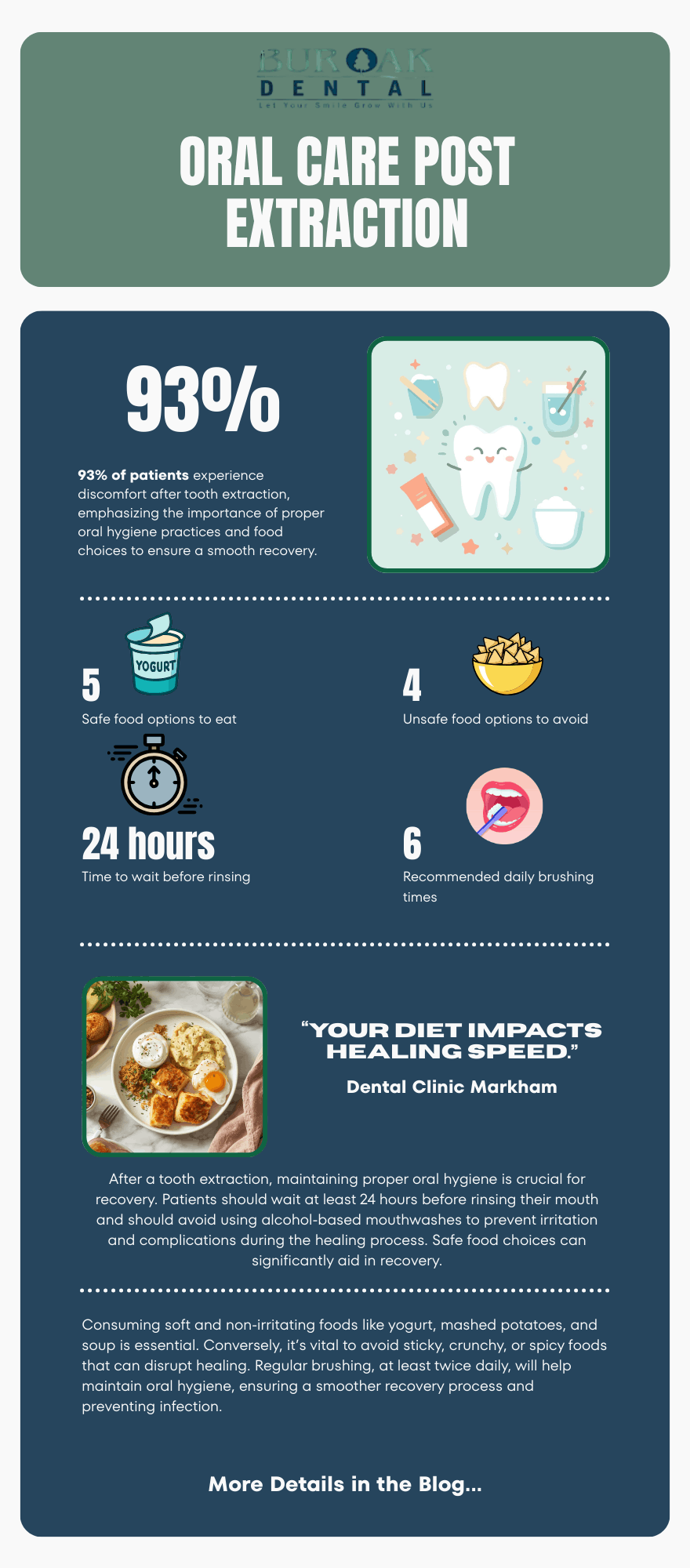
Here is an infographic on the top dental removals do’s and don’ts to help get you ready before the upcoming treatment.
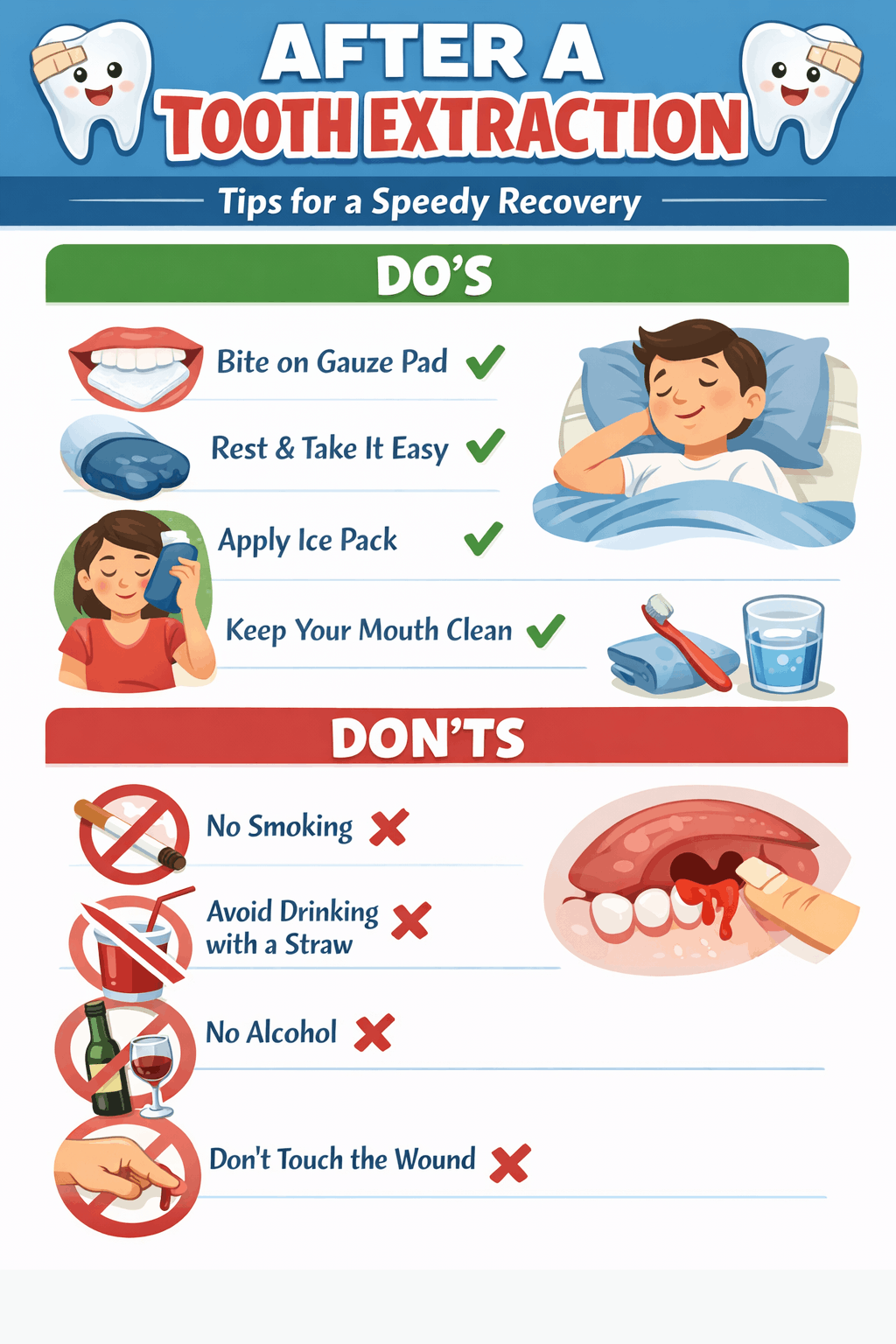
Do’s:
1. Take Rest:
Try to have some rest after Dental Removal. You may feel perfect but don’t work out or do a lot of exercises not less than One day. When resting, keep the head in a little upright position on the pillow.
2. Allow it to clot: Allow the clot to be produced around the dental removal area, which covers it and allows it to cure. Following the procedure, your dentist will give you a bit of cheesecloth to bite on the removal area.
3. Apply Ice Packs: Utilize an ice pack on the side of your face where surgery was carried out. This is done to relieve swelling. During simple removals, swelling isn’t accompanied, in cases needing severe cheek retractions swelling may appear after the operation.
Dont’s:
1. Don’t smoke: For around 2 days after dental removal does not smoke. The harmful chemicals in the smoke may affect the clot, and therefore the probability of creating dry socket 3-4 days after dental removal raises.
2. Don’t eat solids just after: While you have a numb feeling it’s ideal not to eat solids. Once you begin feeling your jaws you can begin getting solids. After dental removal, take soft and liquid meals such as soups, crushed potatoes, yogurts, milkshakes, drinks, etc.
3. Don’t neglect medicines: If antibiotics are provided they must be taken routinely. Painkillers and anti-inflammatory medications are to be taken after dental removal. It helps in minimizing the pain and swelling.
4. Don’t take Aspirin: Aspiring like a blood thinner will hold off in clot formation, therefore, will prevent recovery. Take the medications as recommended by the doctor and talk to your dentist before taking any medicine.
5. Don’t stick: Though for an initial couple of days, it will feel a bit uncomfortable to have a gap but don’t stick that spot with any kind of toothpick or tongue as it may delay recovery, may cause bleeding and can also result in a dry socket.
Aftercare Guide: What to Expect & How to Heal Well
While your infographic gives a quick snapshot of what to do and avoid after a tooth extraction, understanding the healing timeline, symptoms to watch for, and best practice guidance from a Markham dentist can help you recover more confidently and with fewer risks.
As your trusted dentist in Markham, Bur Oak Dental wants you to feel fully prepared for a smooth recovery and excellent results.
What to Expect in the First 24 Hours
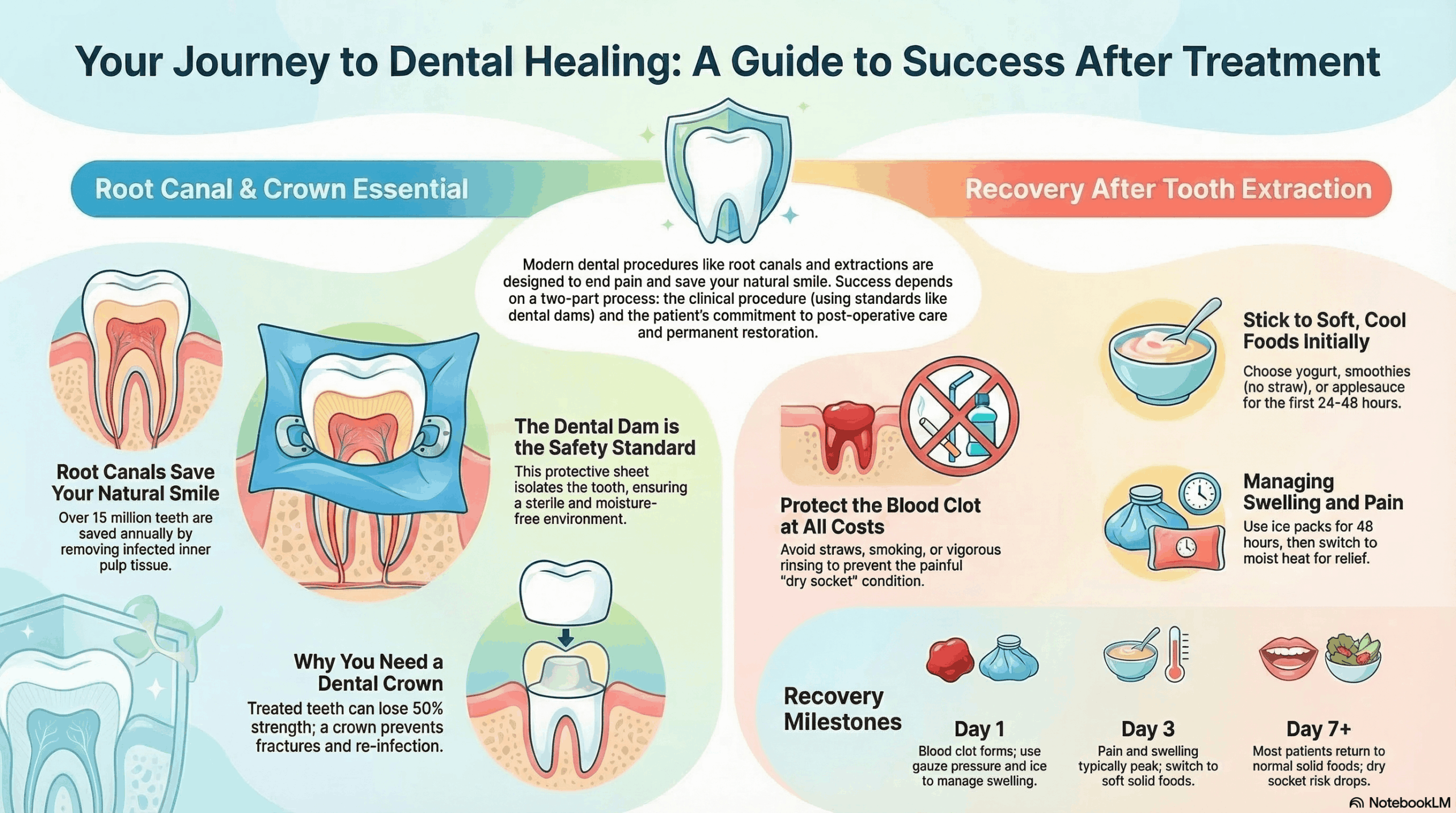
The first day after a tooth extraction is the most critical. Your body begins forming a blood clot in the socket where your tooth was removed.
This clot is essential — it protects the bone and nerves beneath and is the first step in the healing process.
One of the most common complications after an extraction is a dry socket, which occurs when this clot is dislodged prematurely, exposing sensitive tissue.
Your Markham dentist recommends…
- Avoid spitting forcefully for at least the first 24 hours. Gentle spitting is okay, but vigorous spitting can disturb the clot.
- Skip drinking through a straw during the first 48–72 hours. The suction motion can dislodge the clot and delay healing.
- Rest and limit physical activity. Light walking is fine, but avoid strenuous exercise for at least 48 hours.
Healing Timeline: Days 2–7 and Beyond
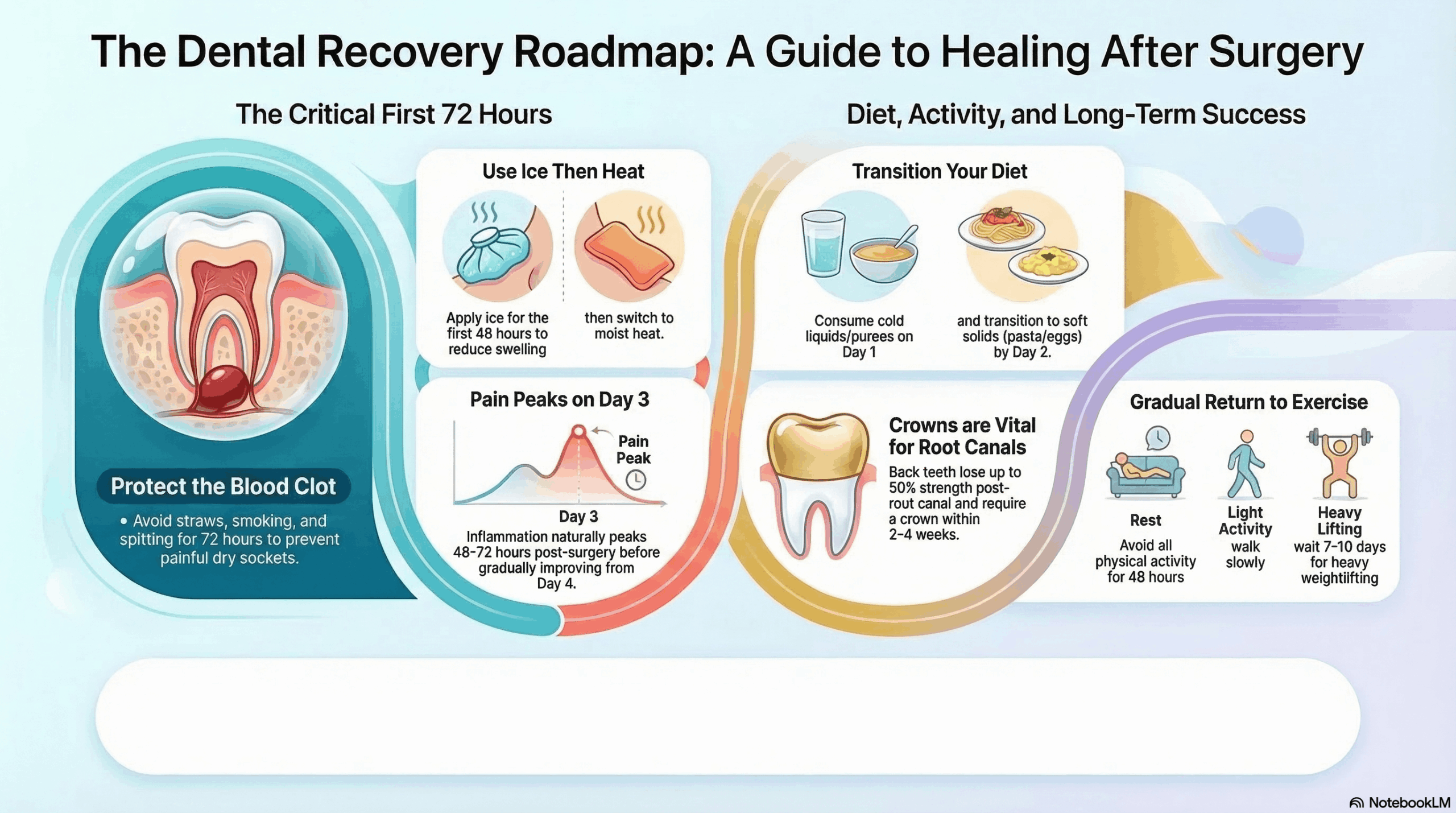
Each patient heals at their own pace, but here’s what most people experience:
-
Days 2–3: Mild swelling and discomfort may peak. A cold compress on the cheek can reduce swelling.
-
Days 3–5: Swelling should decrease; soft foods become easier to eat.
-
Days 5–7: Most discomfort and swelling significantly improve. You can start slowly reintroducing more regular foods, avoiding anything too crunchy or sticky.
-
Week 2 and beyond: The extraction site continues healing beneath the surface. Complete healing of the gum and bone can take several weeks.
Rinsing, Oral Care & Hygiene
Proper oral hygiene is vital, but patients often wonder when it’s safe to brush or rinse near the extraction site.
-
Your dentist in Markham advises gentle oral hygiene:
-
You can brush your other teeth as usual, but avoid brushing directly over the extraction site for the first day.
-
After 24 hours, you can rinse gently with salt water (half a teaspoon of salt in 8 oz of warm water) after meals. This helps keep the area clean and reduces bacteria.
-
Avoid commercial mouthwashes during the first few days, especially those with alcohol, as they can irritate tissues and delay healing.
-
Foods to Eat and Foods to Avoid
Eating the right foods supports healing and reduces discomfort. Immediately after your extraction:
Safe Foods
-
Smooth soups (lukewarm, not hot)
-
Greek yogurt
-
Mashed potatoes
-
Scrambled eggs
-
Applesauce
-
Cottage cheese
-
Smoothies without seeds (no straws)
Foods to Avoid
-
Crunchy foods like chips or toast
-
Sticky foods like caramel or gum
-
Spicy or acidic foods
-
Nuts and seeds
-
Hard candies
Your Markham dentist also suggests avoiding alcohol and carbonated beverages during the initial healing phase. These can irritate soft tissues and slow recovery.
Dry Socket — What It Is and How to Prevent It
Dry socket (alveolar osteitis) is one of the most talked about complications after a tooth extraction. It happens when the blood clot in the extraction site becomes dislodged, exposing bone and nerve endings.
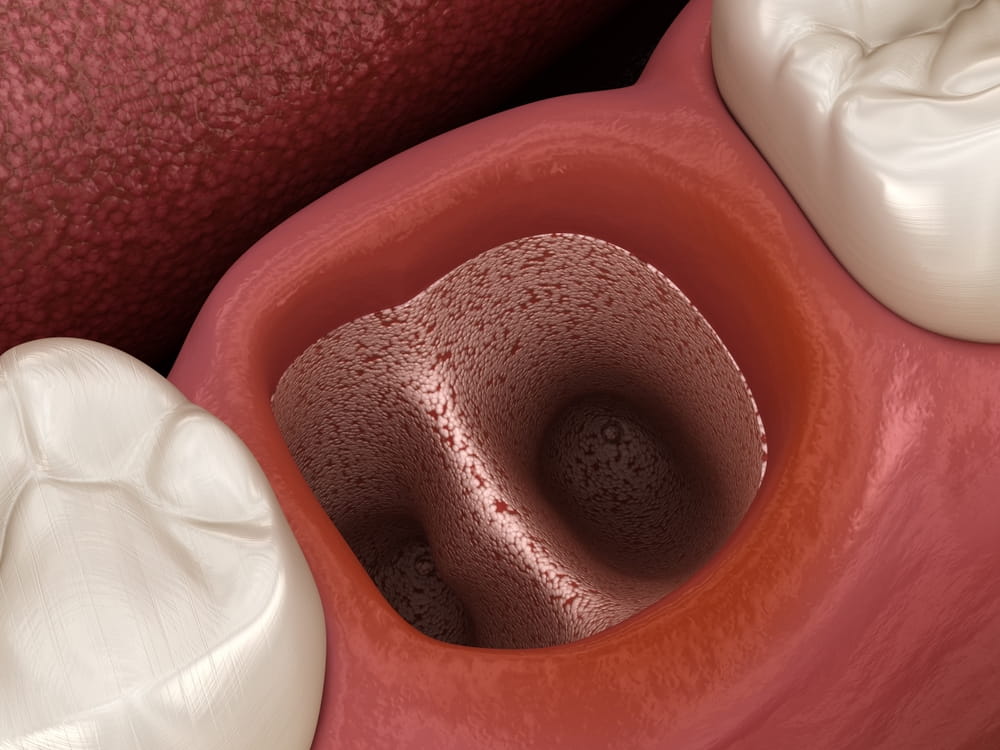
This can cause intensified pain, usually beginning 2–3 days after the extraction. Signs include:
-
Severe pain that radiates from the extraction site
-
A noticeable empty socket where the clot should be
-
Pain that doesn’t improve with over-the-counter pain relievers
To prevent dry socket:
-
Follow all instructions your dentist in Markham gives you about rest and oral care.
-
Stay away from cigarettes and vaping for at least 72 hours — smoke can dislodge the clot and increase infection risk.
-
Keep your mouth clean with gentle salt water rinses after the first day.
Tooth Extraction Cost in Canada (Toronto, Brampton, Markham & Orangeville):
Tooth extraction cost in Canada varies mainly by complexity (a simple “erupted” extraction vs. a surgical/impacted removal) and by add-ons like an exam, X-rays, prescriptions, and sedation.
In Ontario, many offices benchmark fees against the Ontario Dental Association (ODA) Suggested Fee Guide; clinics often cite roughly ~$218–$314 for uncomplicated vs. surgical extraction codes before extras.
In the GTA, real-world quotes can run higher depending on the case and the clinic: Toronto practices commonly mention about $150–$450 per tooth, and some downtown estimates land around $250–$650 per tooth for more involved removals.
- In Brampton, clinics commonly quote around $200–$300 for a straightforward extraction (with surgical cases higher).
- In Markham, wisdom-tooth removals are often quoted around $200–$400 per tooth for simple cases and $450–$750+ per tooth if surgical/impacted.
- In Orangeville, pricing guides frequently list extractions around $150–$300. If you have dental insurance (or CDCP coverage), your out-of-pocket portion may be lower, but plans vary.
Fees can also increase if you need tooth sectioning, a surgical flap, stitches, emergency care, or a bone graft for future implant planning
When to Call Your Dentist
While mild discomfort and swelling are common after a tooth extraction, certain symptoms require prompt attention. As your trusted Markham dentist, we recommend calling Bur Oak Dental if you experience:
-
Severe or worsening pain after a couple of days
-
Heavy bleeding that doesn’t slow down with pressure
-
Fever or chills
-
Pus or foul smell from the extraction site
-
Numbness that doesn’t improve
Reaching out early helps prevent complications and gives you peace of mind during recovery.
Ensuring You’re Ready for Recovery
Many of Markham dentist duties are ensuring that their patients in Markham who’ve had dental removed are well ready for recovery from their dental surgery.
Along with following the above do’s and don’ts, our doctors may also prepare specific postoperative guidelines according to the specific situation.
Feel free to reach out to us at 905-887-1767, or fill in the online form so we could reach out to you instead.
Contact us for More Info –
Whether you consider you may need to have a tooth removed, or already know you need to schedule this dental surgery, we’re pleased to help.